
-
×
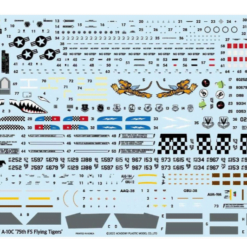 ACADEMY PKAY12348 USAF Fairchild Republic A-10C Thunderbolt II "75th FS Flying Tigers" 1/48
1 × £40.00
ACADEMY PKAY12348 USAF Fairchild Republic A-10C Thunderbolt II "75th FS Flying Tigers" 1/48
1 × £40.00 -
×
 Italeri 26101 WWII German Aircraft Weapons Set No.I 1/72 Scale
2 × £22.50
Italeri 26101 WWII German Aircraft Weapons Set No.I 1/72 Scale
2 × £22.50 -
×
PO285 Metcalfe OO/H0 Scale Industrial Unit Kit
1 × £13.50
-
×
Tamiya 35050 German 8ton Semi-track 20mm Flakvierling Sd.kfz7/1 - 1/35 Scale
1 × £22.00
-
×
TAMIYA 35047 GERMAN 75MM ANTI TANK GUN (1:35 SCALE)
1 × £6.50
-
×
GAUGEMASTER GM752 Small Countryside Backscene - 'N' Gauge
1 × £7.25
-
×
Revell Contacta Professional Extra Thin
1 × £7.00
-
×
PO216 Metcalfe OO/H0 Red Brick Platform Kit
1 × £15.50
-
×
LEGO 60410 Fire rescue Motorcycle
1 × £8.99
-
×
Revell 03821 Bell AH-1G Cobra 1:32 Scale Model Kit
1 × £66.49
-
×
Revell 03944 P-51D Mustang 1:32
1 × £44.99
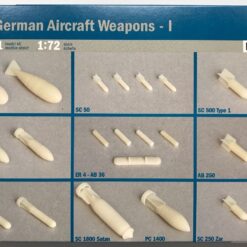 Italeri 26101 WWII German Aircraft Weapons Set No.I 1/72 Scale
  PO285 Metcalfe OO/H0 Scale Industrial Unit Kit
  Tamiya 35050 German 8ton Semi-track 20mm Flakvierling Sd.kfz7/1 - 1/35 Scale
  TAMIYA 35047 GERMAN 75MM ANTI TANK GUN (1:35 SCALE)
  GAUGEMASTER GM752 Small Countryside Backscene - 'N' Gauge
  Revell Contacta Professional Extra Thin
  PO216 Metcalfe OO/H0 Red Brick Platform Kit
  LEGO 60410 Fire rescue Motorcycle
  Revell 03821 Bell AH-1G Cobra 1:32 Scale Model Kit
 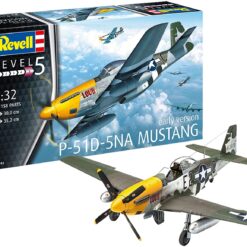 Revell 03944 P-51D Mustang 1:32

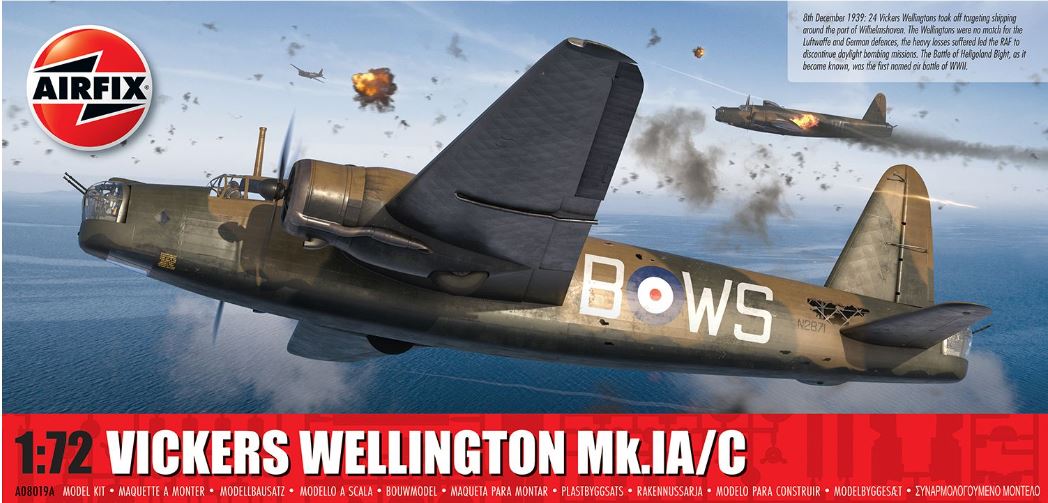


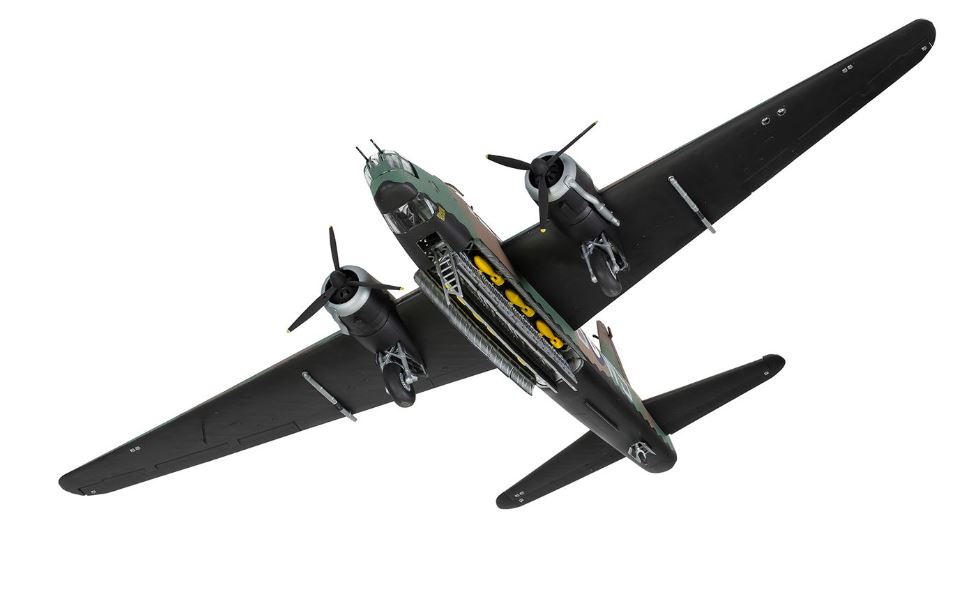
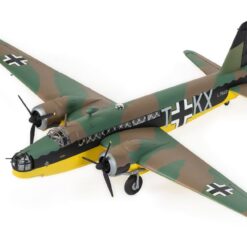

Airfix A08019A Vickers Wellington Mk.IA/C
£41.99
Out of stock
The most capable medium bomber of the day was the twin-engine Vickers Wellington, which first flew in 1936 and entered RAF service with No.99 Squadron at Mildenhall in October 1938. The production aircraft bore little resemblance to the prototype aircraft and compared to contemporary medium bombers already in service, the Wellington appeared to be much more advanced in design and an aircraft feared by any potential enemy. Its sleek monoplane design and heavy defensive armament placed the new Wellington as one the advanced and capable medium bombers in the world.
Perhaps the most significant feature of the Wellingtons design was the adoption of a geodetic construction method, which was developed by famous British engineer and inventor Barnes Wallis. Duralumin W-beams were used to form a metal lattice-work construction on to which wooden battens would be screwed, which would then allow the doped fabric outer skin of the aircraft to be attached.
The resultant fuselage was relatively light in weight but possessed great strength and whilst the method o construction posed challenged for companies engaged in manufacturing Wellington bombers, the inherent strength proved crucial when the aircraft was thrust into combat.
Capable of withstanding significant battle damage, numerous RAF Wellingtons managed to bring their crews back home, when the other bombers would have failed to do so.
| Weight | 0.7 kg |
|---|---|
| Barcode | |
| Manufacturer | |
| Manufacturer Part number |
Only logged in customers who have purchased this product may leave a review.







Reviews
There are no reviews yet.