
-
×
 M0052 Metcalfe OO/H0 Dressed Gritstone Sheets
1 × £6.50
M0052 Metcalfe OO/H0 Dressed Gritstone Sheets
1 × £6.50 -
×
 AMT 1/25 2021 DODGE CHARGER RT AMT1323
1 × £52.99
AMT 1/25 2021 DODGE CHARGER RT AMT1323
1 × £52.99 -
×
Italeri 2813 BAE Hawk T Mk 1 Model Aircraft Kit
1 × £34.99
-
×
 Graham Farish 374-060 BR Mk.1 "SK" Second Corridor Coach "M 24135"
1 × £35.99
Graham Farish 374-060 BR Mk.1 "SK" Second Corridor Coach "M 24135"
1 × £35.99 -
×
Tamiya 35270 Sd.Kfz 222 With Photo Etch Parts
1 × £19.00
-
×
BOT ACTION - Fallschirmjager support group
1 × £29.50
-
×
Revell 06786 Speeder Bike: The Mandalorian Model Kit
1 × £66.49
-
×
Metcalfe M0058 OO/H0 Semi Cut B1 Stonework Sheets
1 × £6.80
-
×
AIRFIX A02029B Messerschmitt Bf109G-6 1:72 Scale
1 × £11.99
-
×
Master AirscrewPropeller GF Series 10x8
1 × £4.15
-
×
Tamiya 85013 TS-13 Clear (Gloss Varnish) - 100ml Spray Can
1 × £7.75
-
×
Metcalfe PO374 00/H0 SCALE NO. 7 HIGH STREET LOW RELIEF SHOP FRONT
1 × £11.00
-
×
OXFORD DIECAST 76CPR003 White Ford Capri Mk2
1 × £8.95
 AMT 1/25 2021 DODGE CHARGER RT AMT1323
 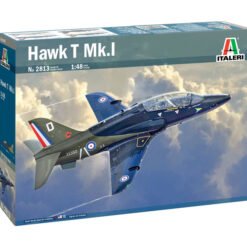 Italeri 2813 BAE Hawk T Mk 1 Model Aircraft Kit
  Graham Farish 374-060 BR Mk.1 "SK" Second Corridor Coach "M 24135"
  Tamiya 35270 Sd.Kfz 222 With Photo Etch Parts
  BOT ACTION - Fallschirmjager support group
  Revell 06786 Speeder Bike: The Mandalorian Model Kit
  Metcalfe M0058 OO/H0 Semi Cut B1 Stonework Sheets
  AIRFIX A02029B Messerschmitt Bf109G-6 1:72 Scale
  Master AirscrewPropeller GF Series 10x8
  Tamiya 85013 TS-13 Clear (Gloss Varnish) - 100ml Spray Can
  Metcalfe PO374 00/H0 SCALE NO. 7 HIGH STREET LOW RELIEF SHOP FRONT
  OXFORD DIECAST 76CPR003 White Ford Capri Mk2

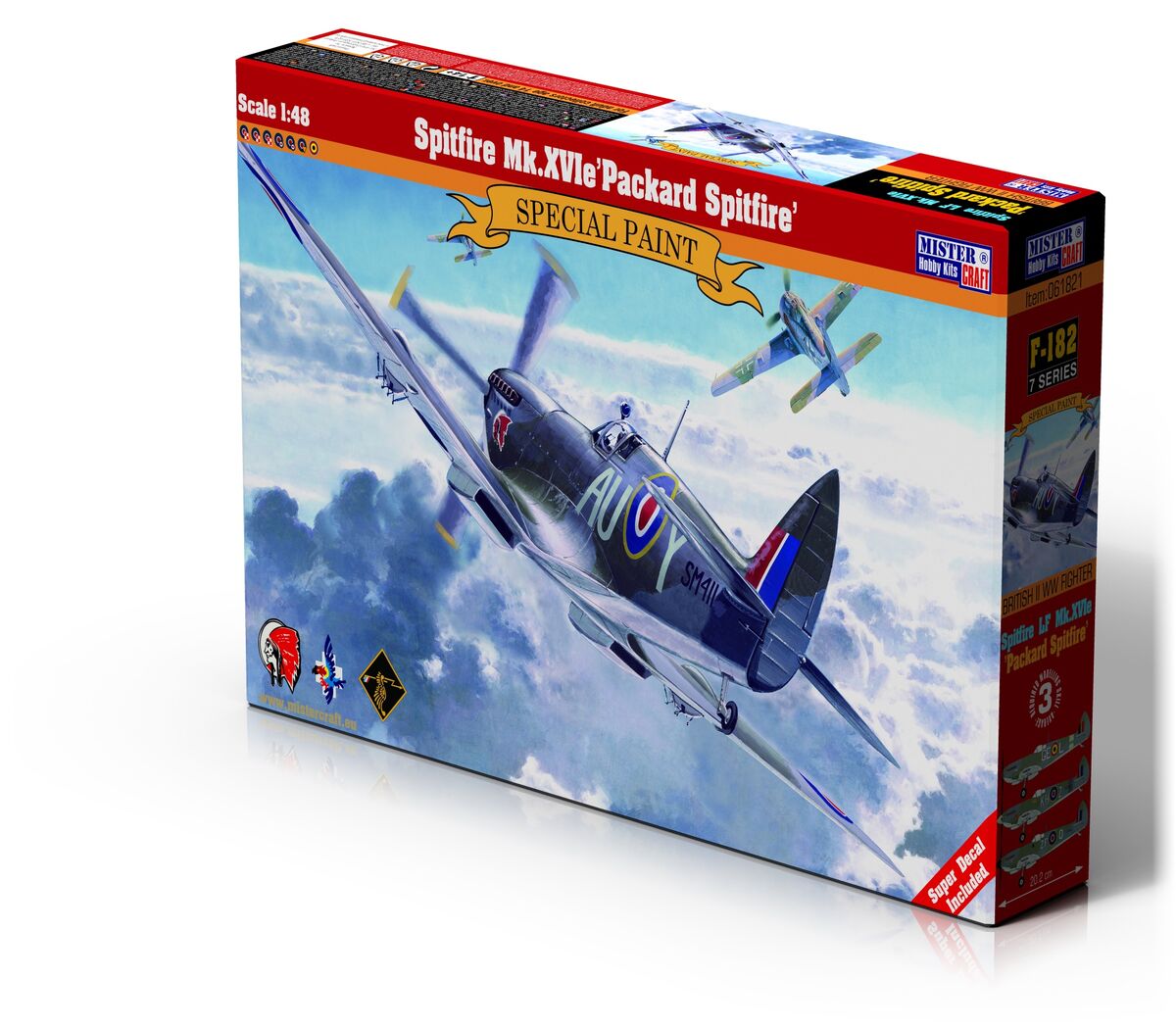
MisterCraft F182 Spitfire Mk. XVIe ‘Packard Spitfire
£28.99
1 in stock
MisterCraft F182 Spitfire Mk. XVIe ‘Packard Spitfire’
Supermarine Spitfire is probably the most famous British fighter from the Second World War. It was an all-metal machine with a low wing configuration, characteristic elliptical wings, a classic tail and a retractable landing gear. The prototype flight took place on March 5, 1936. The Spitfire proved to be the RAF’s staple of the war, which continued to do well after the war, remaining in production for 10 years. The history of the Spitfire began on the drawing desk of RJ Mitchell, Supermarine’s lead designer. The first machines went to RAF units in 1938, but when the Battle of Britain began in the summer of 1940, there were already 19 squadrons of modern fighters at the airfields – together with the slightly older Hurricanes of the Islands, 600 aircraft were defending. With the expansion of hostilities, the Spitfire served wherever the RAF operated in the Far East, North Africa and Italy, during the Normandy landings and fighting in France, and finally during the operation in Germany in 1945. For many Britons, he became a symbol of victory in World War II. This wonderful machine has at least a dozen production versions. The most important of them are, among others the first mass-produced Spitfire Mk.I powered by a 1030hp Rolls-Royce Merlin II engine. It was above all this machine that made such an excellent contribution to the Battle of Britain. Many versions of this model have been developed, including PR Mk IA (reconnaissance version) or PR.IG (armed reconnaissance version). Another interesting version was the Spitfire Mk.V with a Rolls-Royce Merlin 45 engine with 1440HP. Later, Merlin 50 engines were also assembled. Serial production of this version started in 1941 and was the RAF’s response to the appearance of the Messerschmitt Bf-109F. Another very successful version is the Spitfire Mk.IX, powered by a Merlin 61 engine with a 4-blade propeller. It was created as an opponent to the Focke-Wulf Fw-190 and was put into production at the end of 1941. This version was modified many times and, for example, in 1944 it got a new gyro sight, an enlarged rudder or a different wing system. Another major version is the Spitfire Mk.XIV with a Rolls-Royce Griffon 61 engine and a five-bladed propeller. Serial production started in October 1943. One of the last series produced was the Mk.21 version. This version had a Griffon 61 engine, a strongly reinforced structure and sheathing, the wings were extended, increasing their flying surface. Mass production started in March 1945. Technical data (Mk.XIV version): length: 9.14m, wingspan: 11.23m, height: 3.05m, maximum speed: 717km / h, rate of climb: 18.5m / s, practical ceiling: 13,200m, range maximum: 1815 km, armament: fixed – 4 7.7mm machine guns and 2 20mm Hispano Mk II cannons, suspended – up to 225 kg of bombs.
| Weight | 0.7 kg |
|---|---|
| Barcode | |
| Manufacturer Part number |
Only logged in customers who have purchased this product may leave a review.




Reviews
There are no reviews yet.