
-
×
 Peco SL-92 Left hand small point
1 × £21.10
-
×
 PECO PL-26Y Passing Contact Switch
1 × £11.30
-
×
 DAPOL 4F-013-141 OO Gauge Gunpowder Van Blue Circle 177 Weathered
1 × £13.99
-
×
RAPIDO 915005 OAA No. 100016, BR bauxite
1 × £39.95
-
×
Heljan HN5111 CARGOWAGGON IGA BOGIE FLAT BLUE WEATHERED
1 × £64.96
-
×
HORNBY R171 Single Home Signal
1 × £17.50
-
×
Airfix A55010 Starter Set - Lockheed Martin F-35B Lightning II
1 × £19.99
-
×
HORNBY R170 Junction Distant Signal
1 × £22.99
-
×
Ratio 250 Multi-Gauge Signal Remote Control Kit
1 × £5.96
-
×
PO283 Metcalfe OO/H0 Small Factory Kit
1 × £16.25
-
×
BUSH 1153 SMALL ANIMALS HO/OO
1 × £10.75
-
×
PO289 Metcalfe OO/H0 Fire Station Kit
1 × £20.20
-
×
Busch 5405 Flexible 12 LED Garland
1 × £31.75
-
×
Viessmann 6095 Double Street Lamp, Modern Whip 100mm H0/OO
1 × £16.20
-
×
PO331 Metcalfe OO/H0 Red Brick Single Track Engine Shed Kit
1 × £17.00
-
×
 HORNBY R172 Single Distant Signal
1 × £17.50
-
×
KESTREL GMKD61 Petrol Station Sign (Lit)
1 × £4.00
-
×
METCALFE PN186 N SCALE RAMSHACKLE WORKSHOP
1 × £13.10
-
×
JAVIS JS21 Pasture Green
1 × £2.99
-
×
panzershop 152mmSHKHvz.77 "DANA"
1 × £79.99
-
×
AIRFIX A01730V Romans 1/72 SCALE
1 × £5.99
-
×
CADA Solar Crest Racing Car - 160 pcs
1 × £6.50
-
×
Atlantis A502 1/48 H-25 HUP-2 Army Mule Helicopter
1 × £31.99
-
×
A06020 Airfix North American B-25B Mitchell 1:72 Scale
1 × £34.99
-
×
Ratio 233 Loading Gauge - N Gauge
1 × £6.76
 Peco SL-92 Left hand small point
 DAPOL 4F-013-141 OO Gauge Gunpowder Van Blue Circle 177 Weathered
 RAPIDO 915005 OAA No. 100016, BR bauxite
 Heljan HN5111 CARGOWAGGON IGA BOGIE FLAT BLUE WEATHERED
 HORNBY R171 Single Home Signal
 Airfix A55010 Starter Set - Lockheed Martin F-35B Lightning II
 HORNBY R170 Junction Distant Signal
 Ratio 250 Multi-Gauge Signal Remote Control Kit
 PO283 Metcalfe OO/H0 Small Factory Kit
 BUSH 1153 SMALL ANIMALS HO/OO
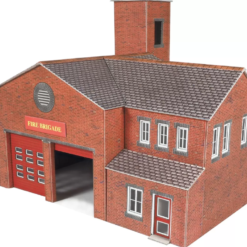 PO289 Metcalfe OO/H0 Fire Station Kit
 Busch 5405 Flexible 12 LED Garland
 Viessmann 6095 Double Street Lamp, Modern Whip 100mm H0/OO
 PO331 Metcalfe OO/H0 Red Brick Single Track Engine Shed Kit
 HORNBY R172 Single Distant Signal
 KESTREL GMKD61 Petrol Station Sign (Lit)
 METCALFE PN186 N SCALE RAMSHACKLE WORKSHOP
 JAVIS JS21 Pasture Green
 panzershop 152mmSHKHvz.77 "DANA"
 AIRFIX A01730V Romans 1/72 SCALE
 CADA Solar Crest Racing Car - 160 pcs
 Atlantis A502 1/48 H-25 HUP-2 Army Mule Helicopter
 A06020 Airfix North American B-25B Mitchell 1:72 Scale
 Ratio 233 Loading Gauge - N Gauge


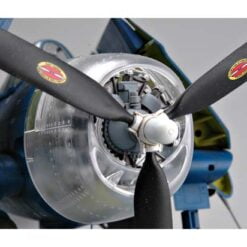
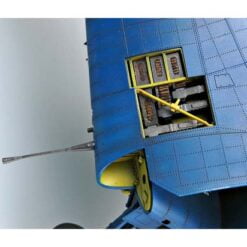


Trumpeter 02259 1/32 F6F-5N Hellcat Night Fighter
£70.00
Out of stock
The Grumman F6 Hellcat is an American, single-engine, WWII, semi-shell fighter in a low wing design. The F6 Hellcat was developed as a development of the successful F4F design. When designing it, 18-month-long experience with the operation of F4F in the Pacific and numerous comments of pilots fighting on Wildcat airplanes was used. Structurally, the F6 Hellcat resembled its predecessor with one major change. A low wing system was used, which allowed the landing gear to be retracted into the lower center wing instead of into the fuselage. This increased the track width and the stability in motion on the ground. Additionally, the cockpit armor was used and the ammunition was increased. The U.S. Navy’s evaluation of the Grumman proposal resulted in an order in June 1941 for four prototypes – from the XF6F-1 to the XF6F-4 – each with a different powertrain. The XF6F-1 flight took place a year after signing the contract, but due to the urgent need to strengthen the Wildcats (F4F), the same airframe was equipped with the most powerful of the available Pratt-Whitney R-2800-10 engines, thanks to which the plane made its next first flight, this time as the XF6F-3. Even before this second flight took place, Grumman was commissioned to implement the F6F-3 into production as the Hellcat. At this stage, the similarity of the F4F and F6F resulted in a reduction in the time needed to implement the machine into series production. The flight of the first such machine took place at the end of 1942, and shipments to the USS Essex began in January 1943. In August of the same year, the VF-5 squadron from the USS Yorktown was the first to use its Hellcats against the Japanese. The structure of the plane was entirely made of metal, connected with flush rivets, and the wings were folded with tips to facilitate hangar on the deck of aircraft carriers. Standard armament consisted of six 12.7 mm machine guns mounted in the nose of the wing. The hull and tail were of a classic design, differing from the F4F only in dimensions. The three-support undercarriage was fully retractable by means of a hydraulic system, as was the hook for shortening the landing run. The spacious pilot’s cabin was raised high above the plane of the wings. The production of all versions of the F6 exceeded 12,200 copies, and its intensity was so high that it was possible to replace the F4F used so far with them very quickly. Technical data (for the F6F-5 version): Top speed: 620 km / h, climb speed: 14 m / s, practical ceiling 11,400 m, maximum range: 1,755 km, armament: fixed – six 12.7mm Browning machine guns Suspended – up to 1800 kg of bombs or an additional fuel tank.
| Weight | 1.1 kg |
|---|---|
| Barcode | |
| Manufacturer | |
| Manufacturer Part number |
Only logged in customers who have purchased this product may leave a review.
Related products
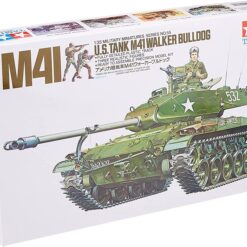


£80.00



Reviews
There are no reviews yet.