
-
×
 SIKU 3561 LIEBHERR L556 WHEEL-LOADER 1/50
1 × £26.99
-
×
 KIDS GLOBE 1964 1:32 CALVES HOUSE WITH 2 CALVES
1 × £10.00
-
×
SIKU 2940 Tractor with ploughing plate and salt spreader 1/50 SCALE
1 × £29.99
-
×
BRITAINS 45220 Big Farm John Deere 348 Square Baler with 4 Bales - 1:16 Scale
1 × £25.00
-
×
SIKU 3548 MENZI MUCK WALKING EXCAVATOR 1/50
1 × £35.99
-
×
SIKU 2456 Kuhn Rear Disc Mower, 1:32
1 × £19.99
-
×
SIKU 2069 Amazone Centaur, Soil Tillage Machine for Tractors, 1:32,
1 × £40.00
-
×
 KIDS GLOBE HORSES 0205 Mitsubishi with Horse Trailer, AND ACCESSOIRES
1 × £19.00
-
×
Siku 2875 Twin Axled Stock Trailer - 1:32
1 × £29.99
-
×
Siku 1295 Bulldozer
1 × £4.99
-
×
SIKU 0811 REFUSE TRUCK 1/76 ,
1 × £4.00
-
×
SIKU 0847 Massey Ferguson Tractor 1/76 , SCALE
1 × £4.99
-
×
ERTL JD 549 john deere hydra-push spreader
1 × £25.00
-
×
BOLT ACTION - Soviet Army support group
1 × £29.50
-
×
BACHMANN 37-905 BR 12T Shock Van BR Bauxite (Late)
1 × £26.95
-
×
Humbrol No.153 INSIGNIA RED 14ml MATT Enamel Tinlet
1 × £2.99
 KIDS GLOBE 1964 1:32 CALVES HOUSE WITH 2 CALVES
 SIKU 2940 Tractor with ploughing plate and salt spreader 1/50 SCALE
 BRITAINS 45220 Big Farm John Deere 348 Square Baler with 4 Bales - 1:16 Scale
 SIKU 3548 MENZI MUCK WALKING EXCAVATOR 1/50
 SIKU 2456 Kuhn Rear Disc Mower, 1:32
 SIKU 2069 Amazone Centaur, Soil Tillage Machine for Tractors, 1:32,
 KIDS GLOBE HORSES 0205 Mitsubishi with Horse Trailer, AND ACCESSOIRES
 Siku 2875 Twin Axled Stock Trailer - 1:32
 Siku 1295 Bulldozer
 SIKU 0811 REFUSE TRUCK 1/76 ,
 SIKU 0847 Massey Ferguson Tractor 1/76 , SCALE
 ERTL JD 549 john deere hydra-push spreader
 BOLT ACTION - Soviet Army support group
 BACHMANN 37-905 BR 12T Shock Van BR Bauxite (Late)
 Humbrol No.153 INSIGNIA RED 14ml MATT Enamel Tinlet


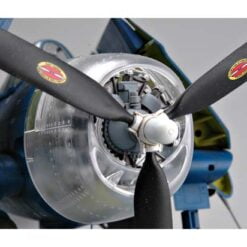
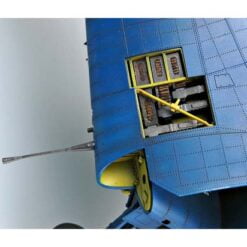


Trumpeter 02259 1/32 F6F-5N Hellcat Night Fighter
£70.00
Out of stock
The Grumman F6 Hellcat is an American, single-engine, WWII, semi-shell fighter in a low wing design. The F6 Hellcat was developed as a development of the successful F4F design. When designing it, 18-month-long experience with the operation of F4F in the Pacific and numerous comments of pilots fighting on Wildcat airplanes was used. Structurally, the F6 Hellcat resembled its predecessor with one major change. A low wing system was used, which allowed the landing gear to be retracted into the lower center wing instead of into the fuselage. This increased the track width and the stability in motion on the ground. Additionally, the cockpit armor was used and the ammunition was increased. The U.S. Navy’s evaluation of the Grumman proposal resulted in an order in June 1941 for four prototypes – from the XF6F-1 to the XF6F-4 – each with a different powertrain. The XF6F-1 flight took place a year after signing the contract, but due to the urgent need to strengthen the Wildcats (F4F), the same airframe was equipped with the most powerful of the available Pratt-Whitney R-2800-10 engines, thanks to which the plane made its next first flight, this time as the XF6F-3. Even before this second flight took place, Grumman was commissioned to implement the F6F-3 into production as the Hellcat. At this stage, the similarity of the F4F and F6F resulted in a reduction in the time needed to implement the machine into series production. The flight of the first such machine took place at the end of 1942, and shipments to the USS Essex began in January 1943. In August of the same year, the VF-5 squadron from the USS Yorktown was the first to use its Hellcats against the Japanese. The structure of the plane was entirely made of metal, connected with flush rivets, and the wings were folded with tips to facilitate hangar on the deck of aircraft carriers. Standard armament consisted of six 12.7 mm machine guns mounted in the nose of the wing. The hull and tail were of a classic design, differing from the F4F only in dimensions. The three-support undercarriage was fully retractable by means of a hydraulic system, as was the hook for shortening the landing run. The spacious pilot’s cabin was raised high above the plane of the wings. The production of all versions of the F6 exceeded 12,200 copies, and its intensity was so high that it was possible to replace the F4F used so far with them very quickly. Technical data (for the F6F-5 version): Top speed: 620 km / h, climb speed: 14 m / s, practical ceiling 11,400 m, maximum range: 1,755 km, armament: fixed – six 12.7mm Browning machine guns Suspended – up to 1800 kg of bombs or an additional fuel tank.
| Weight | 1.1 kg |
|---|---|
| Barcode | |
| Manufacturer | |
| Manufacturer Part number |
Only logged in customers who have purchased this product may leave a review.




Reviews
There are no reviews yet.