
-
×
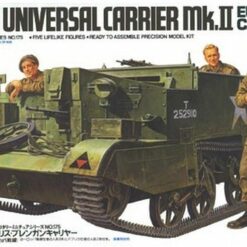 Tamiya 35175 Universal Carrier Mk.II 1:35 Scale Kit
1 × £16.00
Tamiya 35175 Universal Carrier Mk.II 1:35 Scale Kit
1 × £16.00 -
×
 Tamiya 35096 Panzer Kampfwagen IV Ausf.D 1:35 Scale
1 × £16.99
Tamiya 35096 Panzer Kampfwagen IV Ausf.D 1:35 Scale
1 × £16.99 -
×
Bachmann 37-072 5 Plank Wagon Wooden Floor W. H. Wallis & Co Red
1 × £19.96
-
×
Tamiya 35068 British Army Chieftain Mk.5 Kit 1:35 Scale
1 × £21.50
-
×
HORNBY R60114 BR, 12T Fish Van - Era 6
1 × £25.49
-
×
M0053 Metcalfe OO/H0 Engineers Blue Brick Sheets
1 × £6.80
-
×
DAPOL 4F-072-006 7 PLANK WAGON 9FT WHEELBASE ACE OF CLUBS WEATHERED
1 × £14.50
-
×
RAPIDO TRAINS UK 92810 D1744 Ballast Wagon BR Red Oxide POST SR Body No,62433
1 × £32.95
-
×
HORNBY R6749 5-plank Wagon - Farndon, Rugby
1 × £14.99
-
×
Tamiya 35050 German 8ton Semi-track 20mm Flakvierling Sd.kfz7/1 - 1/35 Scale
1 × £22.00
-
×
MPC 967 Class Action 1980 Chevy Monte Carlo 1/25 Scale Plastic Model Kit
1 × £49.99
-
×
Airfix A06108 de Havilland Vampire FB.5/FB.9
1 × £34.99
 Tamiya 35096 Panzer Kampfwagen IV Ausf.D 1:35 Scale
  Bachmann 37-072 5 Plank Wagon Wooden Floor W. H. Wallis & Co Red
 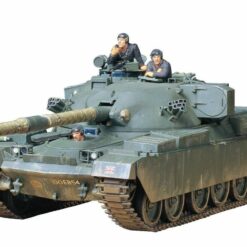 Tamiya 35068 British Army Chieftain Mk.5 Kit 1:35 Scale
  HORNBY R60114 BR, 12T Fish Van - Era 6
  M0053 Metcalfe OO/H0 Engineers Blue Brick Sheets
  DAPOL 4F-072-006 7 PLANK WAGON 9FT WHEELBASE ACE OF CLUBS WEATHERED
  RAPIDO TRAINS UK 92810 D1744 Ballast Wagon BR Red Oxide POST SR Body No,62433
  HORNBY R6749 5-plank Wagon - Farndon, Rugby
  Tamiya 35050 German 8ton Semi-track 20mm Flakvierling Sd.kfz7/1 - 1/35 Scale
 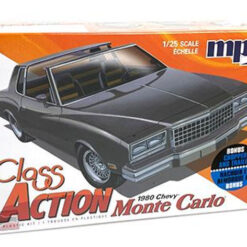 MPC 967 Class Action 1980 Chevy Monte Carlo 1/25 Scale Plastic Model Kit
  Airfix A06108 de Havilland Vampire FB.5/FB.9


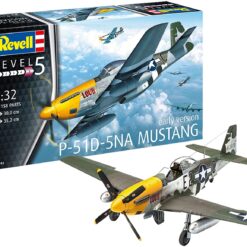
Academy 12481 WW2 U.S.N. Fighter F6F-3/5
£10.00
Out of stock
The Grumman F6 Hellcat is an American, single-engine, WWII, semi-shell fighter in a low wing design. The F6 Hellcat was developed as a development of the successful F4F design. When designing it, 18-month-long experience with the operation of F4F in the Pacific and numerous comments of pilots fighting on Wildcat airplanes was used. Structurally, the F6 Hellcat resembled its predecessor with one major change. A low wing system was used, which allowed the landing gear to be retracted into the lower center wing instead of into the fuselage. This increased the track width and the stability in motion on the ground. Additionally, the cockpit armor was used and the ammunition was increased. The U.S. Navy’s evaluation of the Grumman proposal resulted in an order in June 1941 for four prototypes – from the XF6F-1 to the XF6F-4 – each with a different powertrain. The XF6F-1 flight took place a year after signing the contract, but due to the urgent need to strengthen the Wildcats (F4F), the same airframe was equipped with the most powerful of the available Pratt-Whitney R-2800-10 engines, thanks to which the plane made its next first flight, this time as the XF6F-3. Even before this second flight took place, Grumman was commissioned to implement the F6F-3 into production as the Hellcat. At this stage, the similarity of the F4F and F6F resulted in a reduction in the time needed to implement the machine into series production. The flight of the first such machine took place at the end of 1942, and shipments to the USS Essex began in January 1943. In August of the same year, the VF-5 squadron from the USS Yorktown was the first to use its Hellcats against the Japanese. The structure of the plane was entirely made of metal, connected with flush rivets, and the wings were folded with tips to facilitate hangar on the deck of aircraft carriers. Standard armament consisted of six 12.7 mm machine guns mounted in the nose of the wing. The hull and tail were of a classic design, differing from the F4F only in dimensions. The three-support undercarriage was fully retractable by means of a hydraulic system, as was the hook for shortening the landing run. The spacious pilot’s cabin was raised high above the plane of the wings. The production of all versions of the F6 exceeded 12,200 copies, and its intensity was so high that it was possible to replace the F4F used so far with them very quickly. Technical data (for the F6F-5 version): Top speed: 620 km / h, climb speed: 14 m / s, practical ceiling 11,400 m, maximum range: 1,755 km, armament: fixed – six 12.7mm Browning machine guns Suspended – up to 1800 kg of bombs or an additional fuel tank.
| Weight | 0.3 kg |
|---|---|
| Barcode | |
| Manufacturer | |
| Manufacturer Part number |
Only logged in customers who have purchased this product may leave a review.






Reviews
There are no reviews yet.